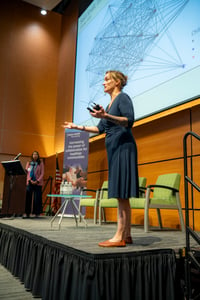
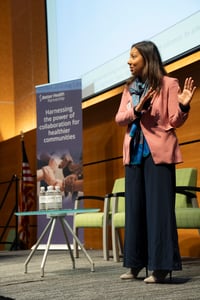
Better Health Partnership welcomed public health leaders, community health workers, physicians, researchers, and partners from across the region to its annual Learning Collaborative at Corporate College East on Friday, November 6. The theme of the day, Progress Happens When We All Stay at the Table, shaped a program of emerging developments in health, shared best practices and, new connections across Northeast Ohio.
Whether you joined us that day or are catching up now, the full agenda, session presentations, photos, and additional resources are all here.
📑 Full Agenda and Speaker Bios — the complete program, including all session descriptions and presenter biographies.


Left to Right: Matthew Tien, MD, FAAP; Olushola Fapo, MD, MPH, FAAP; Roopa Thakur, MD, FAAP
2026 Collaborative Champion Honorees
At this year's Learning Collaborative, Better Health Partnership was proud to recognize Matthew Tien, MD, FAAP,
of The MetroHealth System; Olushola Fapo, MD, MPH, FAAP, of University Hospitals; and Roopa Thakur, MD, FAAP,
of Cleveland Clinic with our 2026 Collaborative Champion Awards. These three pediatricians have demonstrated an
extraordinary commitment to childhood lead poisoning prevention, early detection, and improving health outcomes
for children across Northeast Ohio.
Through their leadership, they've helped expand in-office lead testing, strengthen follow-up care for children with
elevated blood lead levels, advance quality improvement efforts, and build stronger connections among healthcare
providers, public health agencies, and community partners. Although they represent three different health systems,
their shared dedication to collaboration has helped strengthen our region's approach to childhood lead poisoning
prevention. Their work exemplifies the spirit of Better Health Partnership and reminds us that progress happens
when we all stay at the table.
Please join us in congratulating our 2026 Collaborative Champions!
Getting Better Together: Collective Well-Being and the Work of Staying In It
Systems Change Using a Patient-Centered Approach: The Esther Model